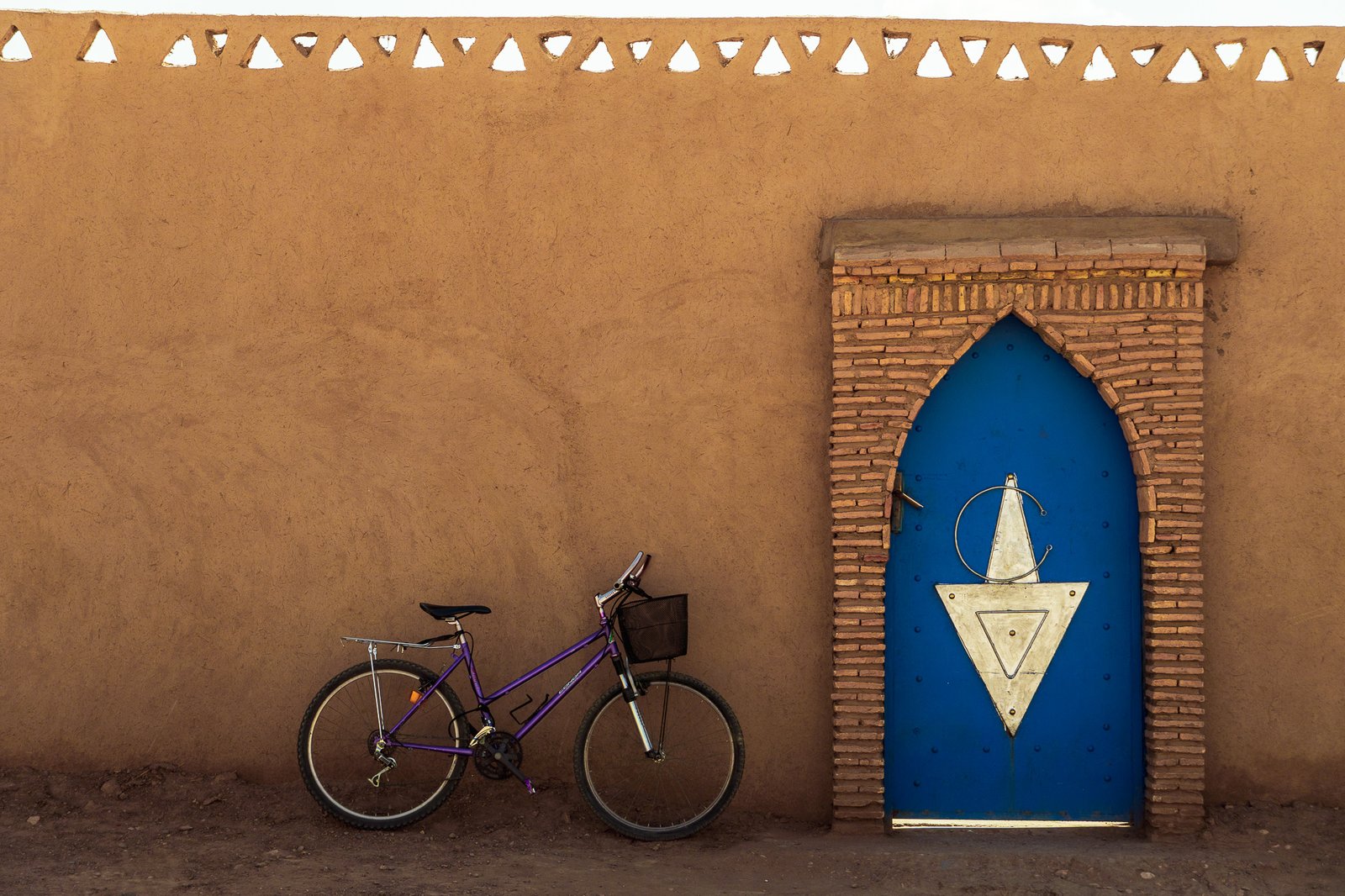
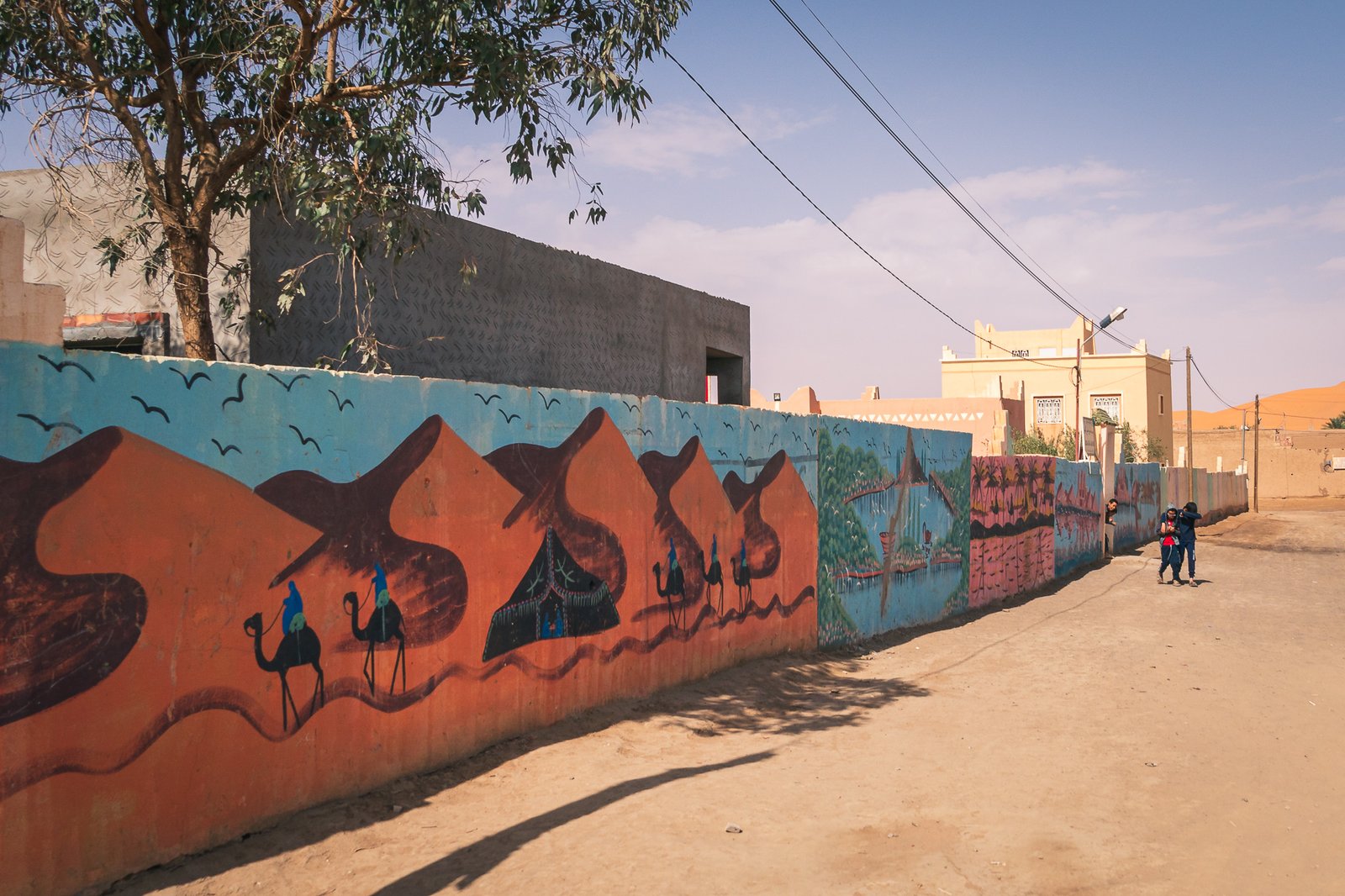
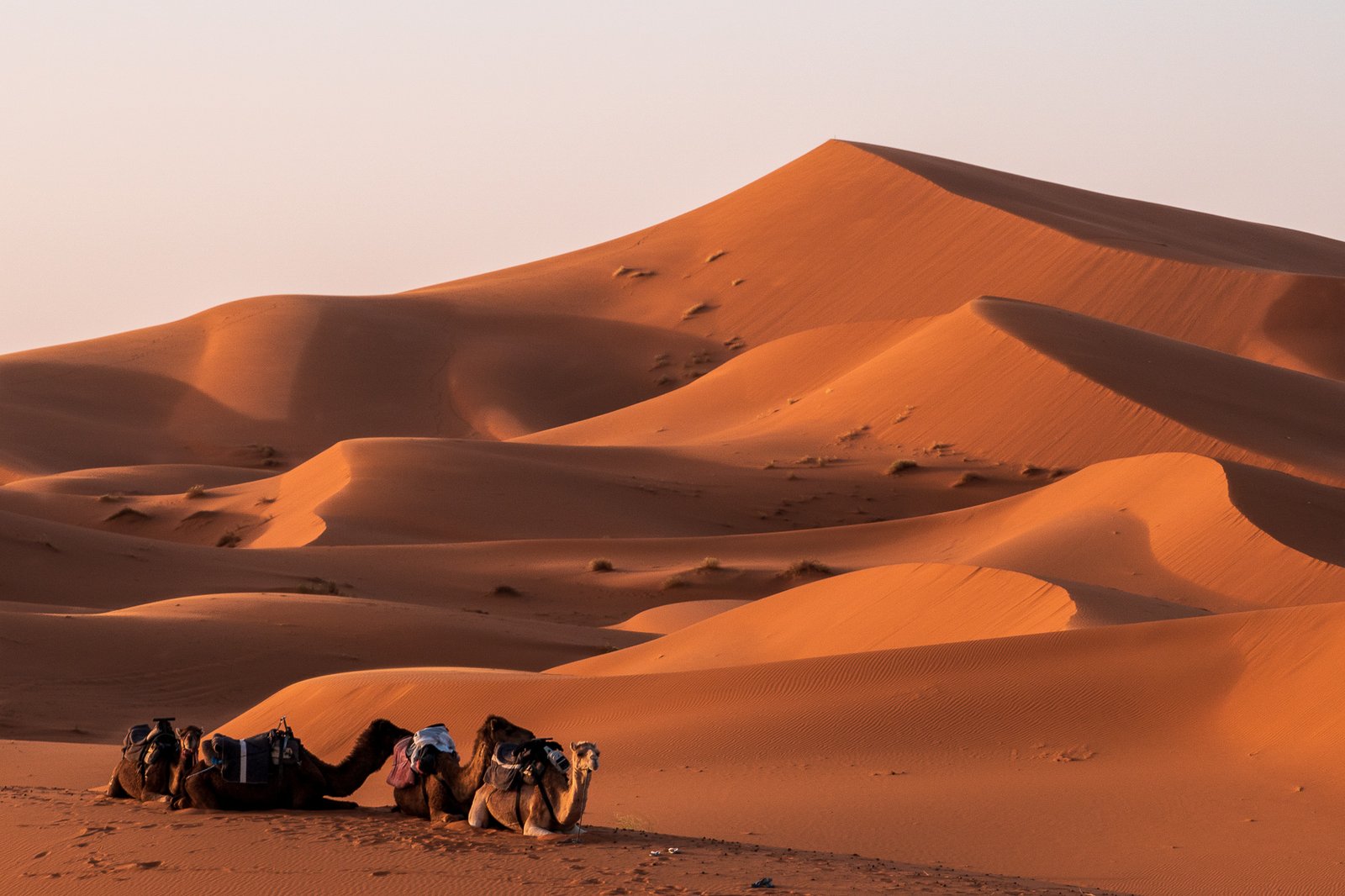
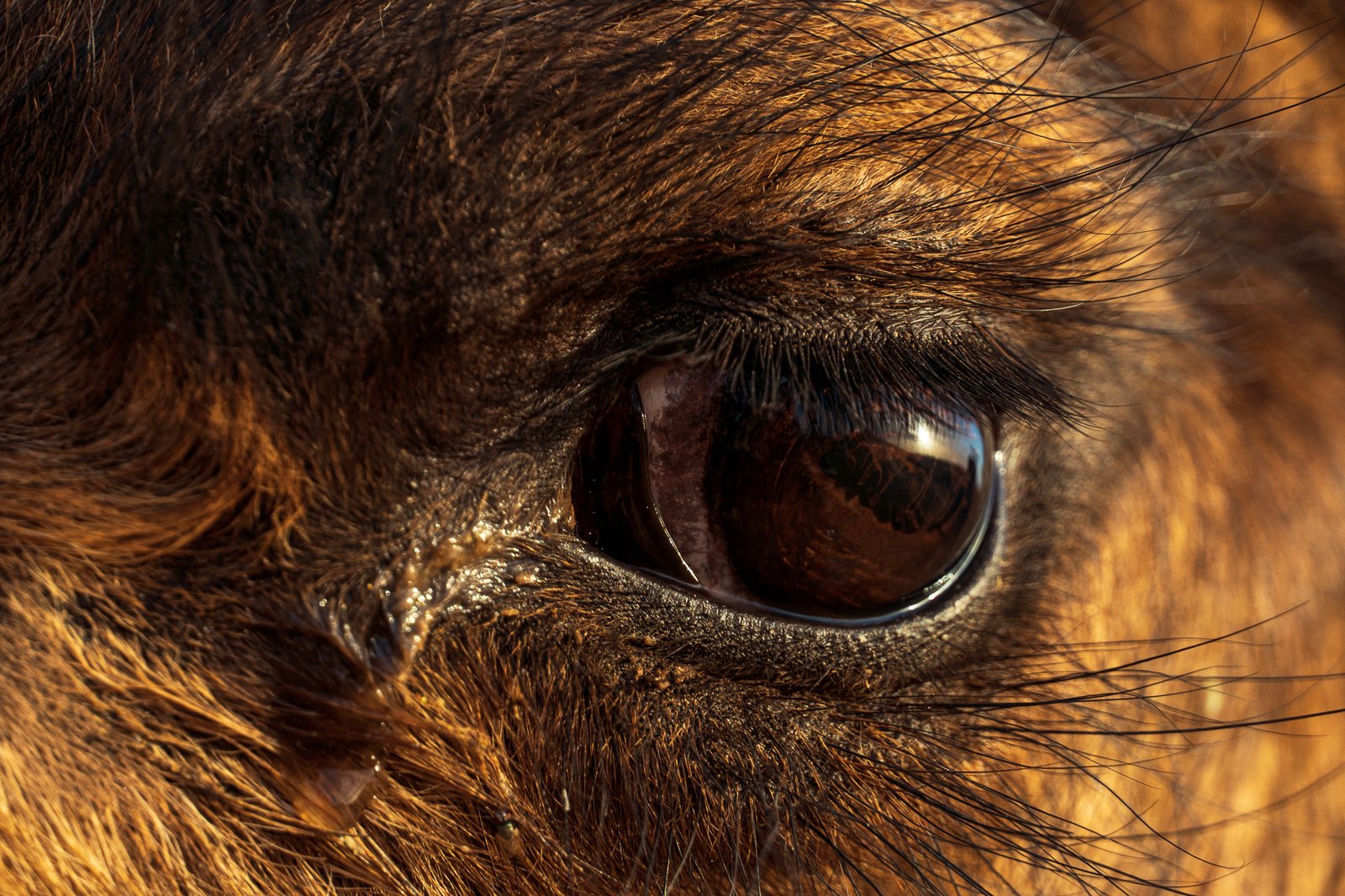
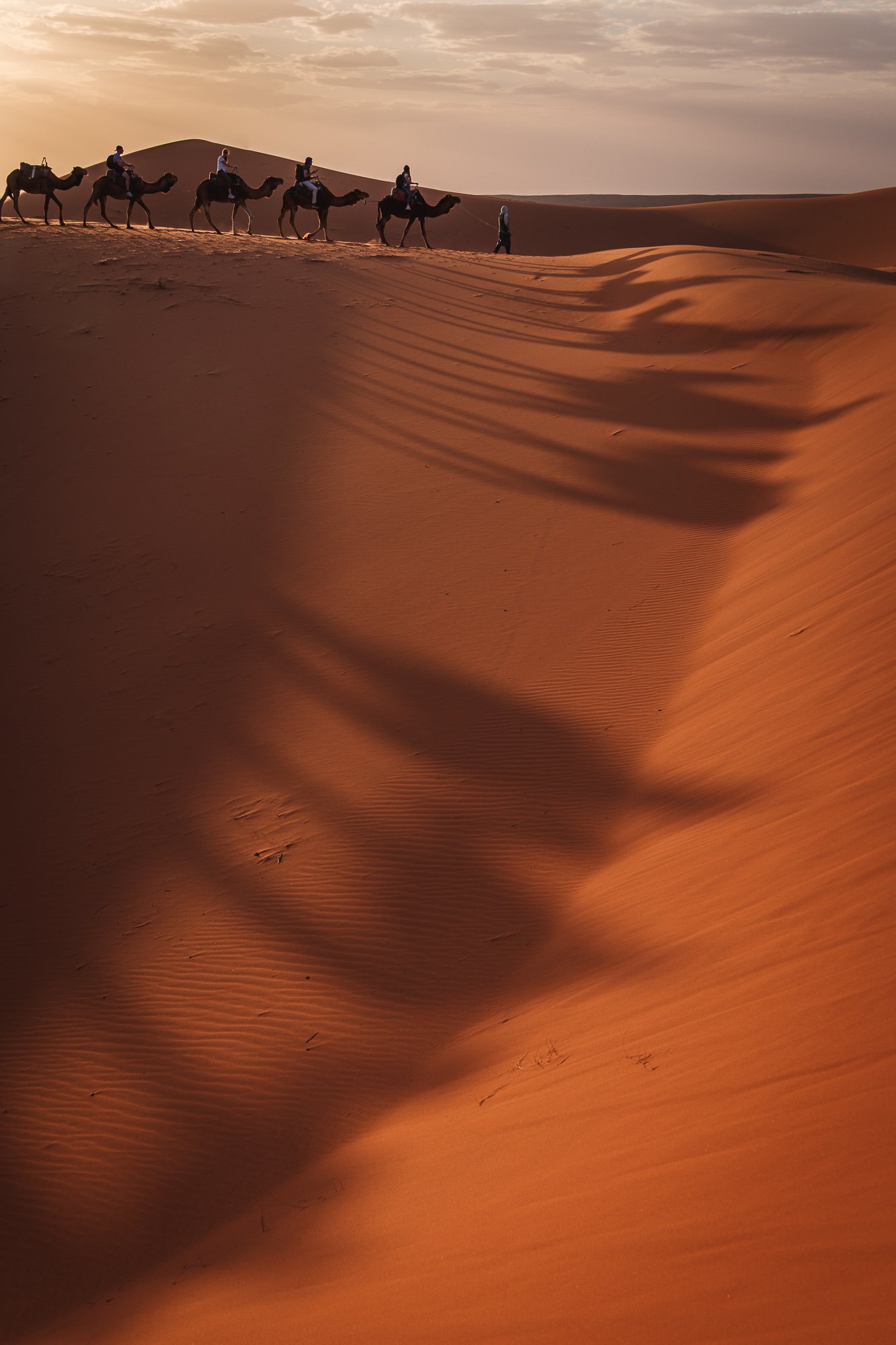
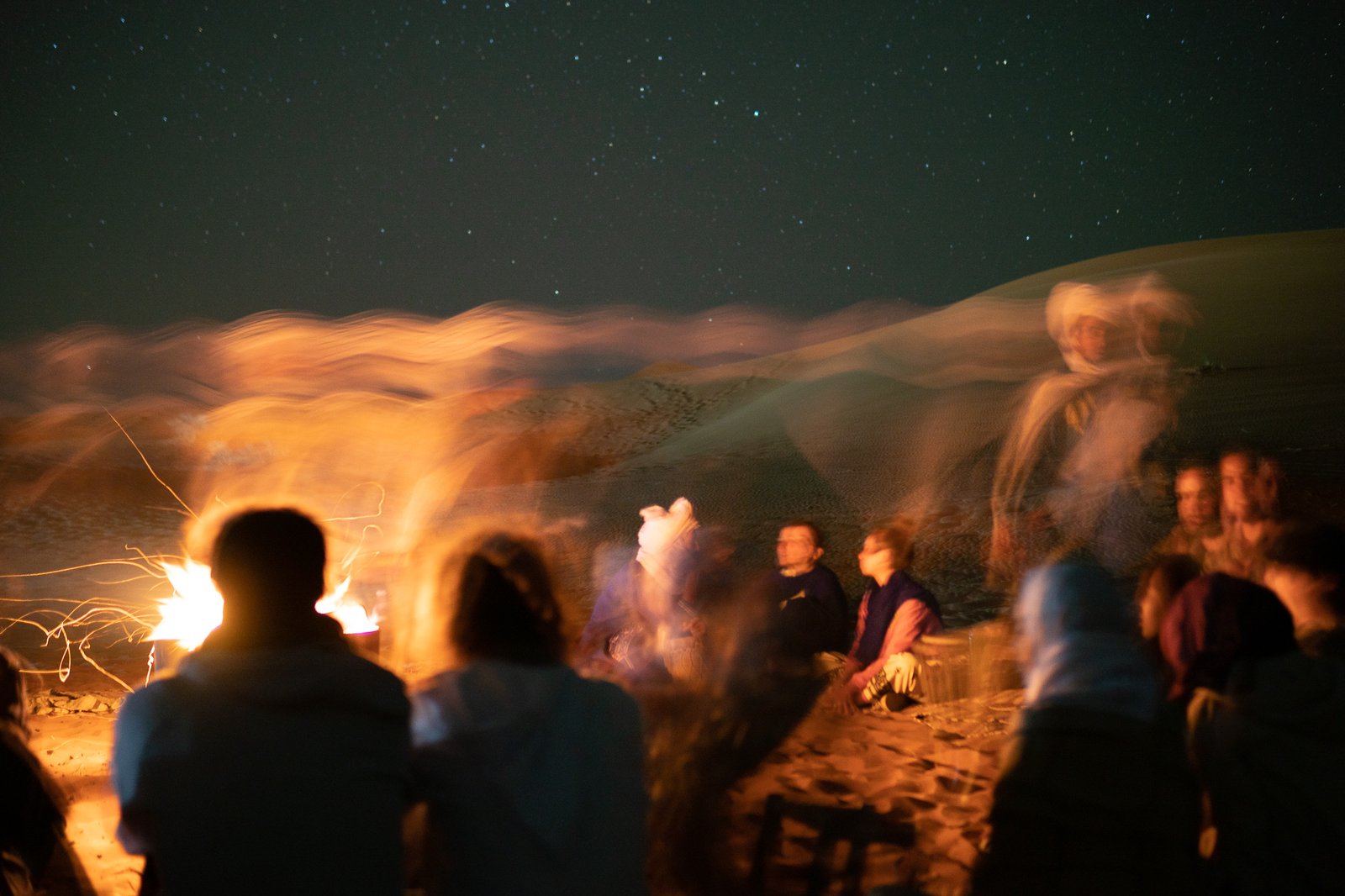
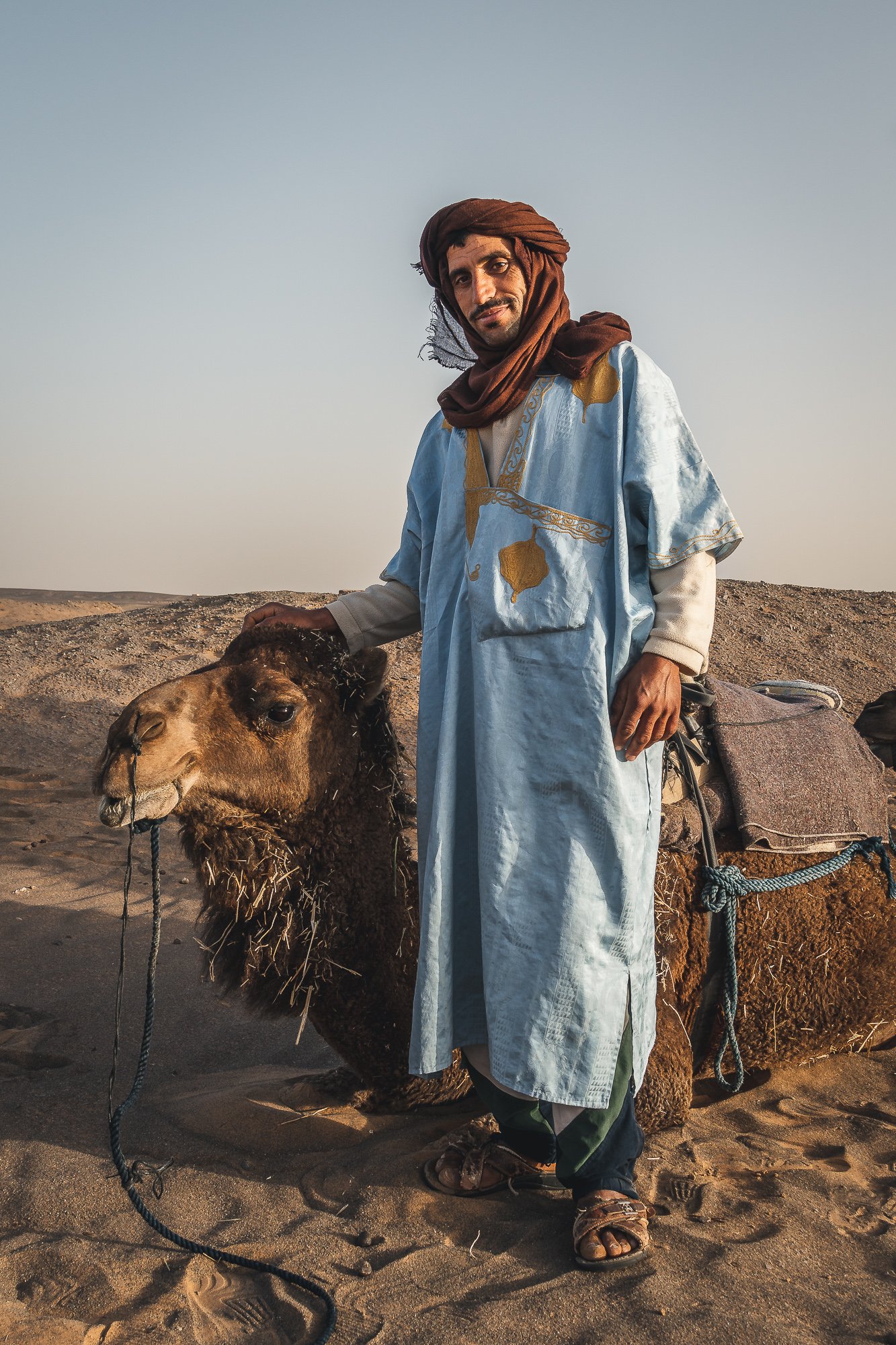
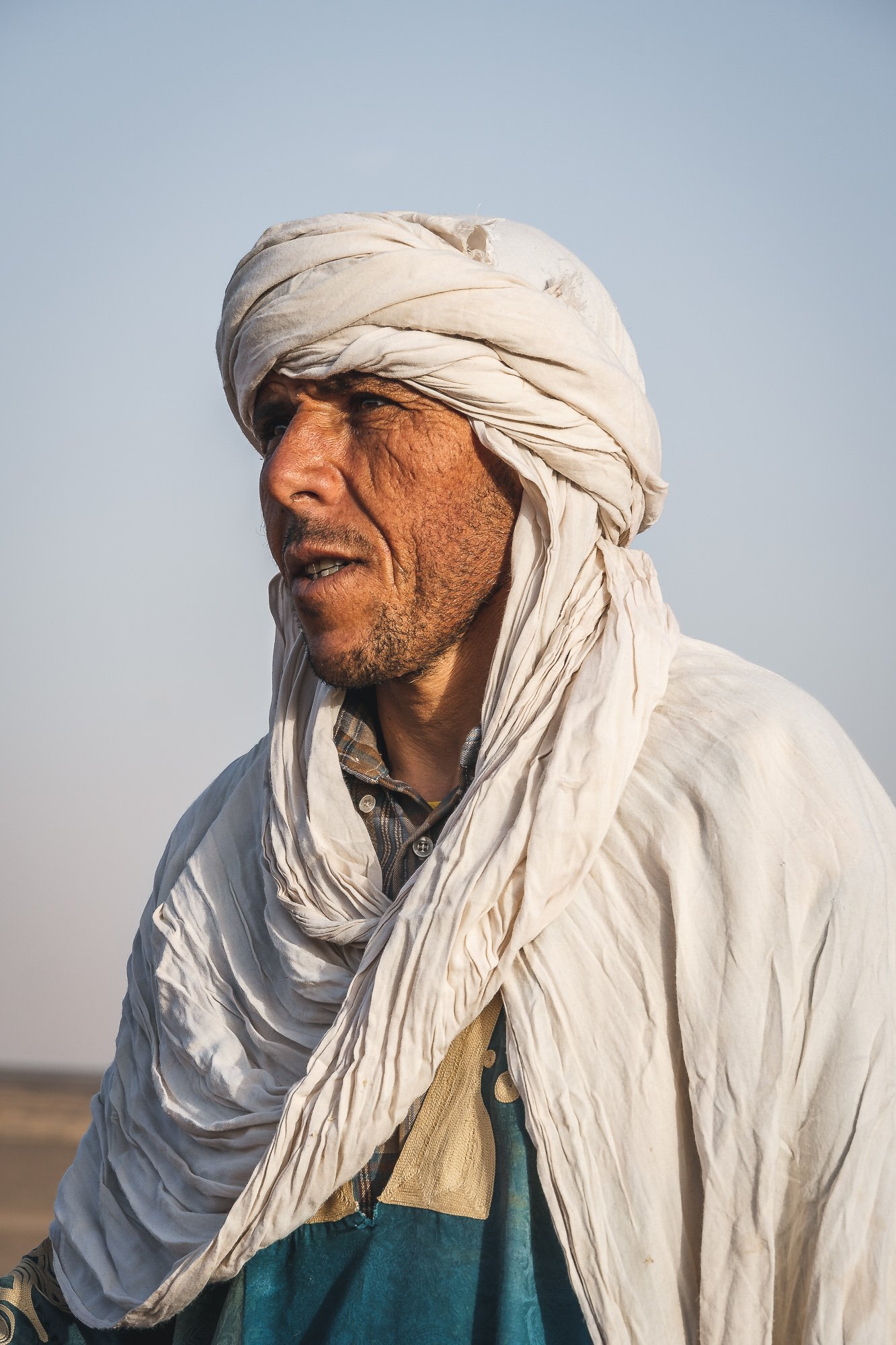
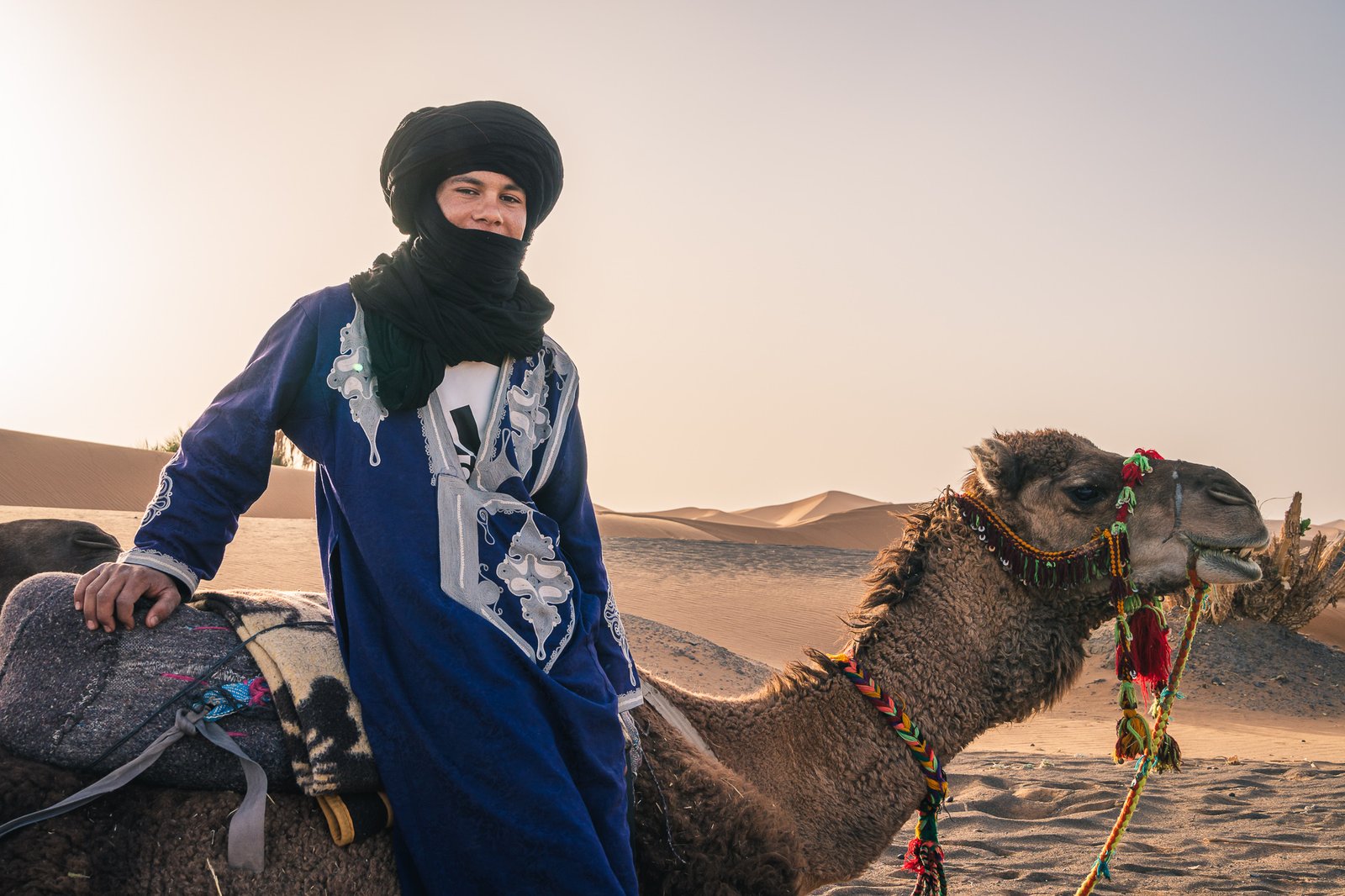
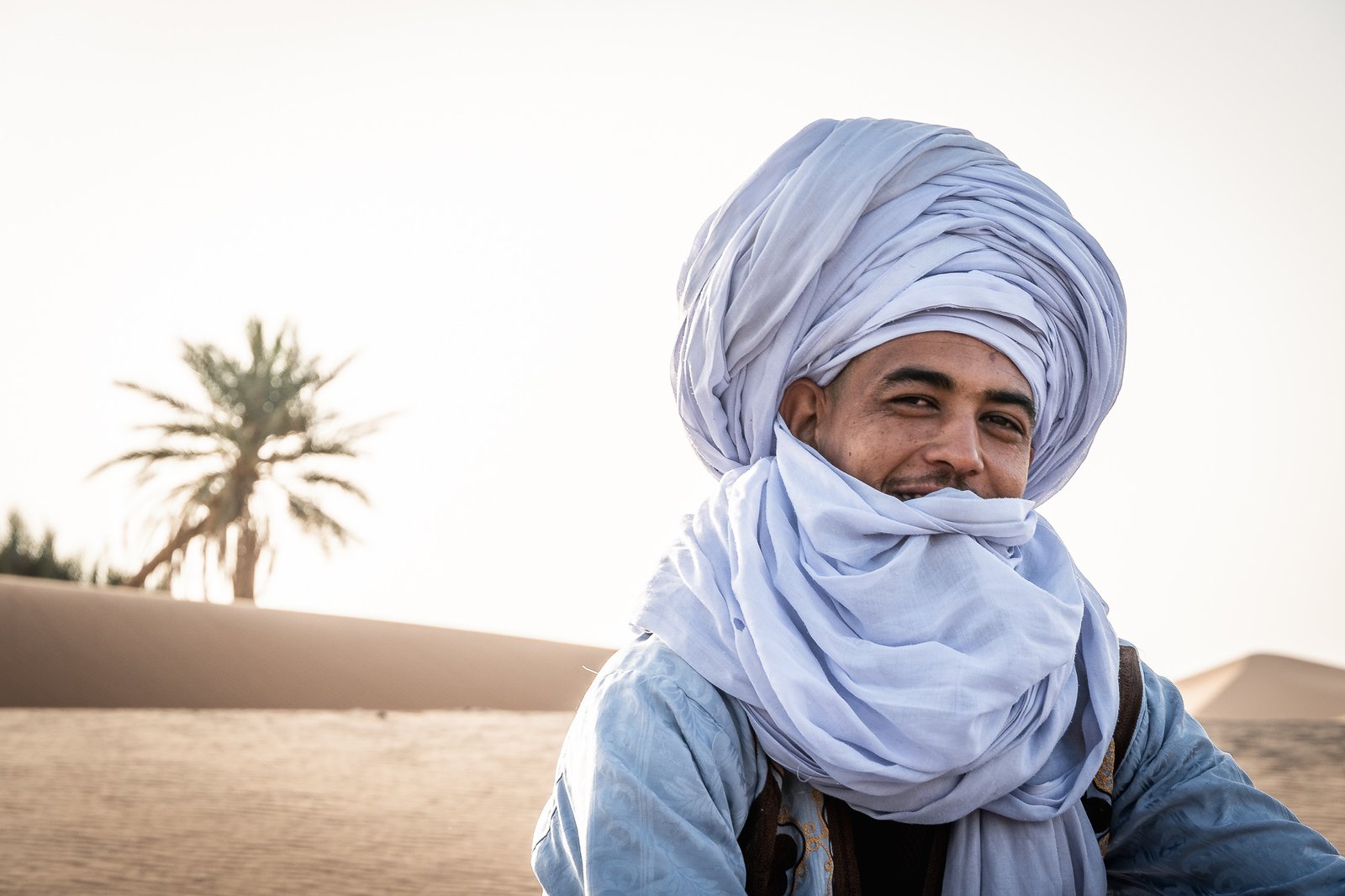
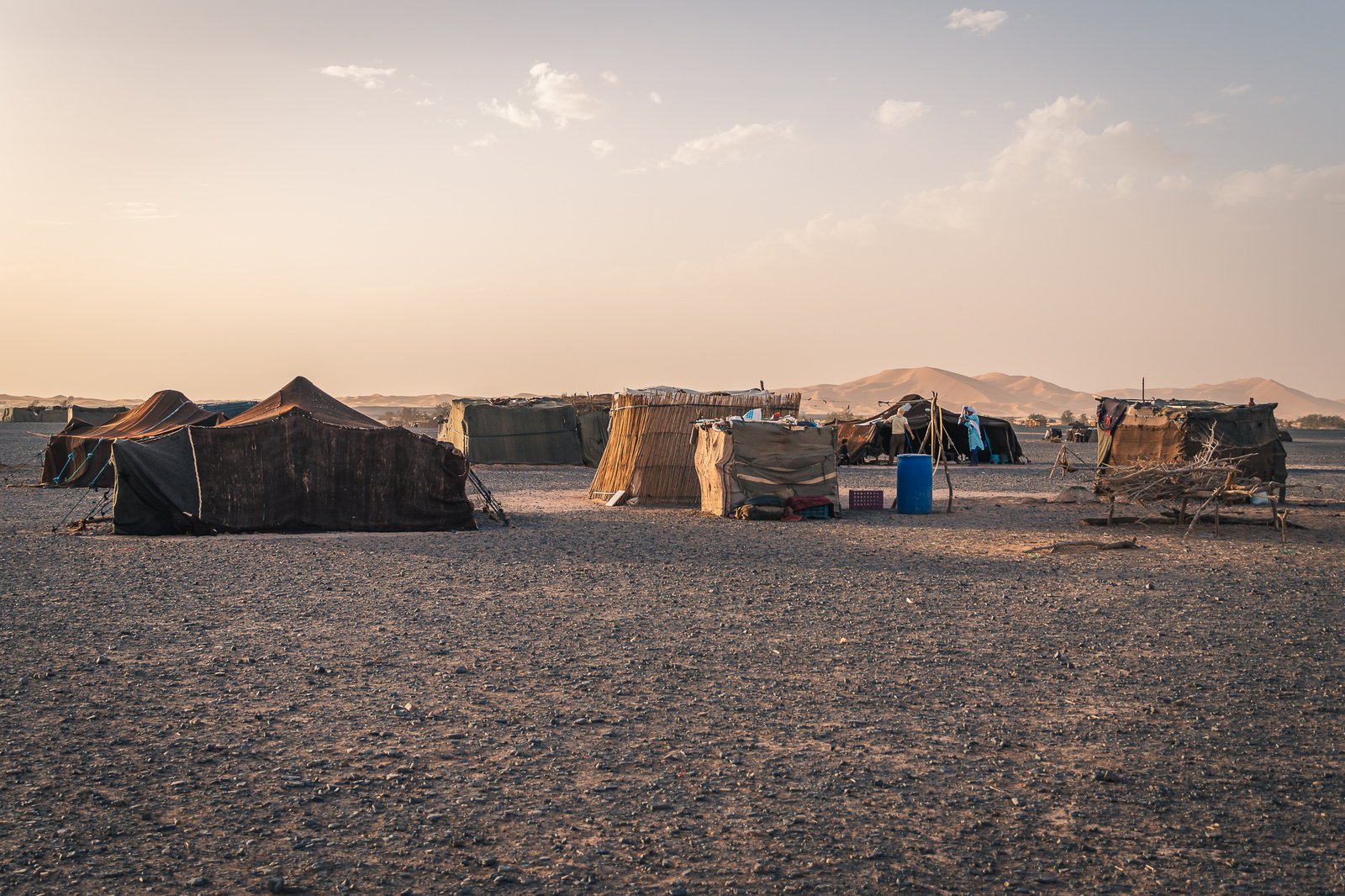
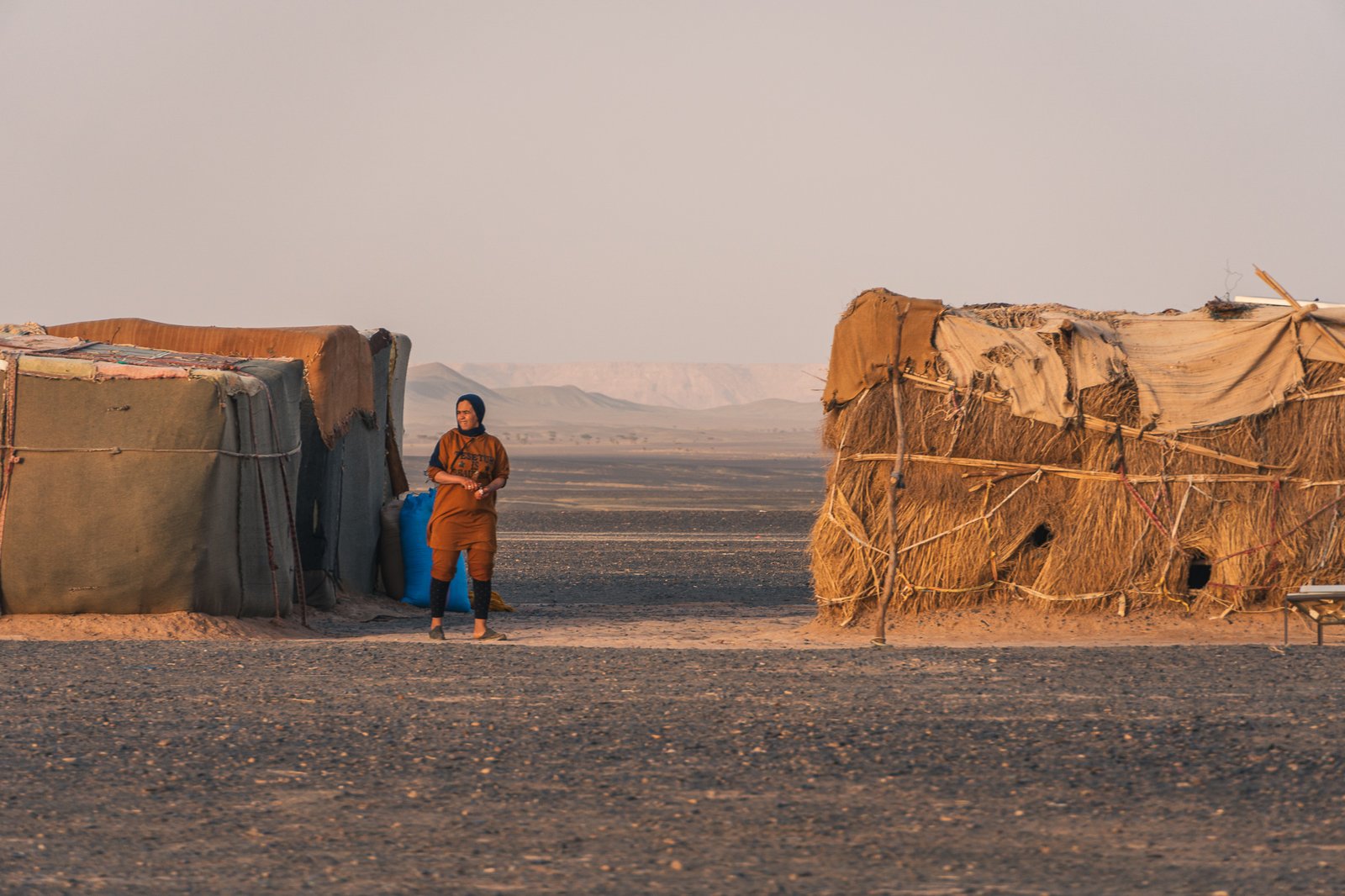
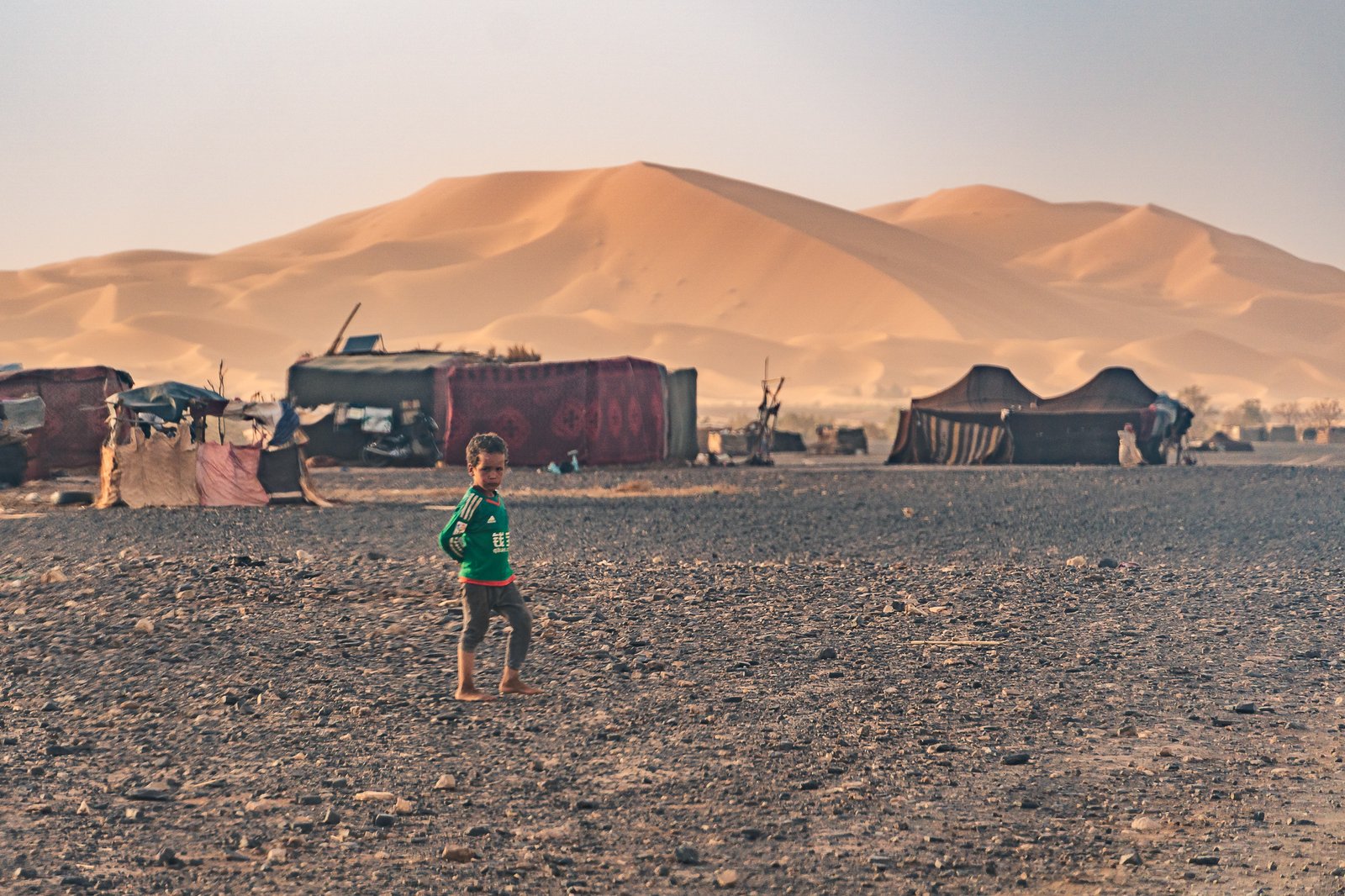
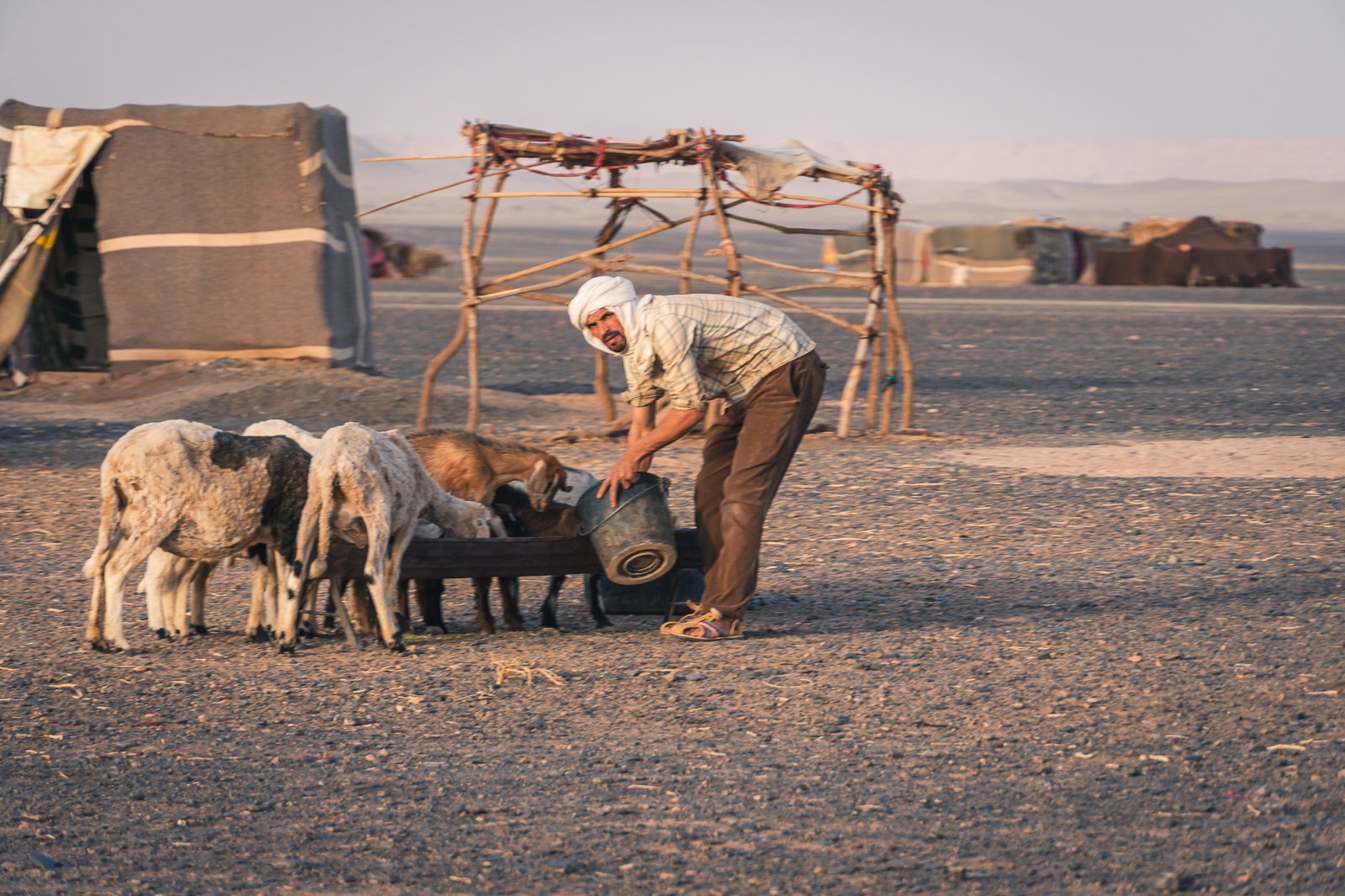
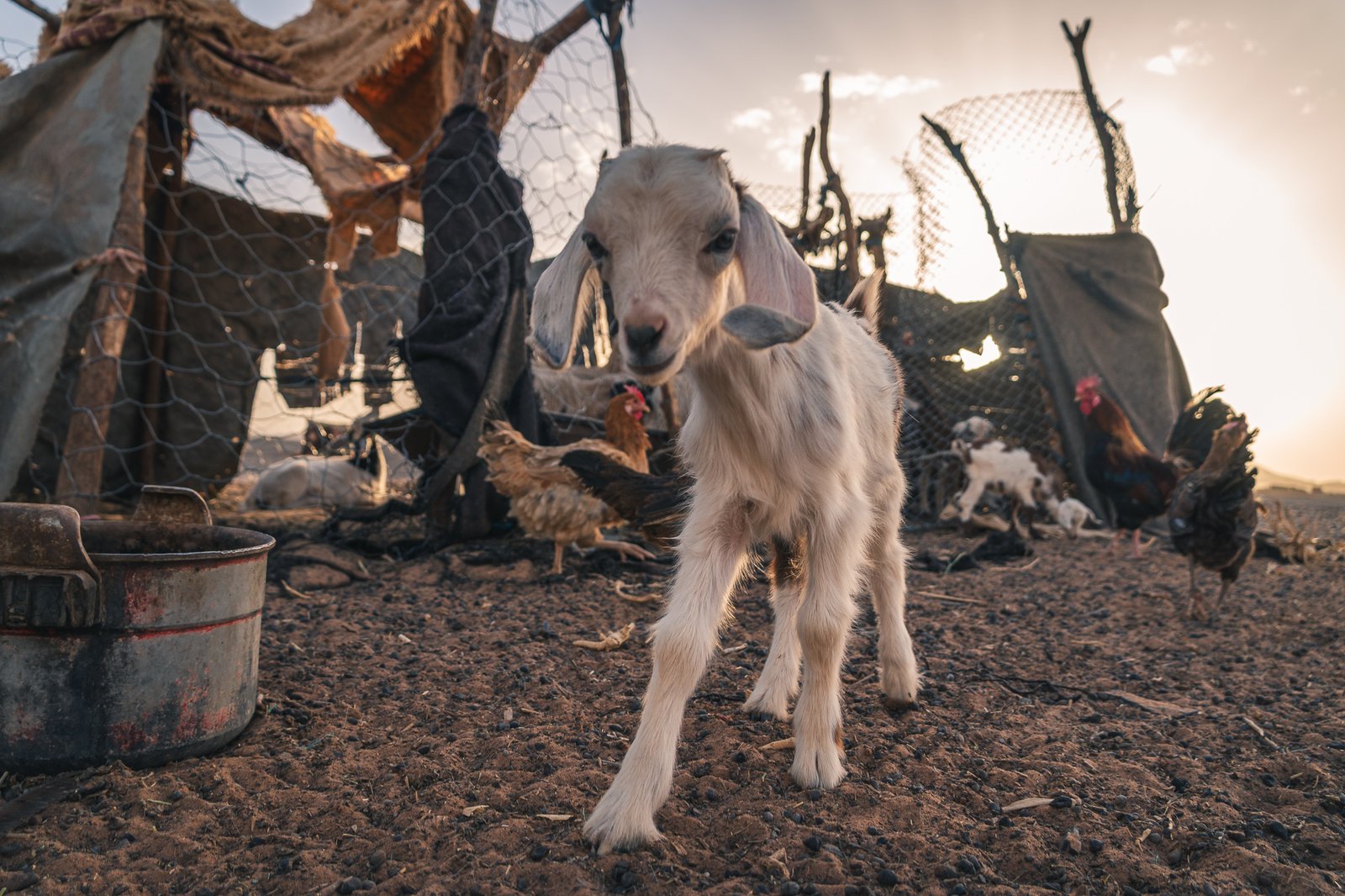
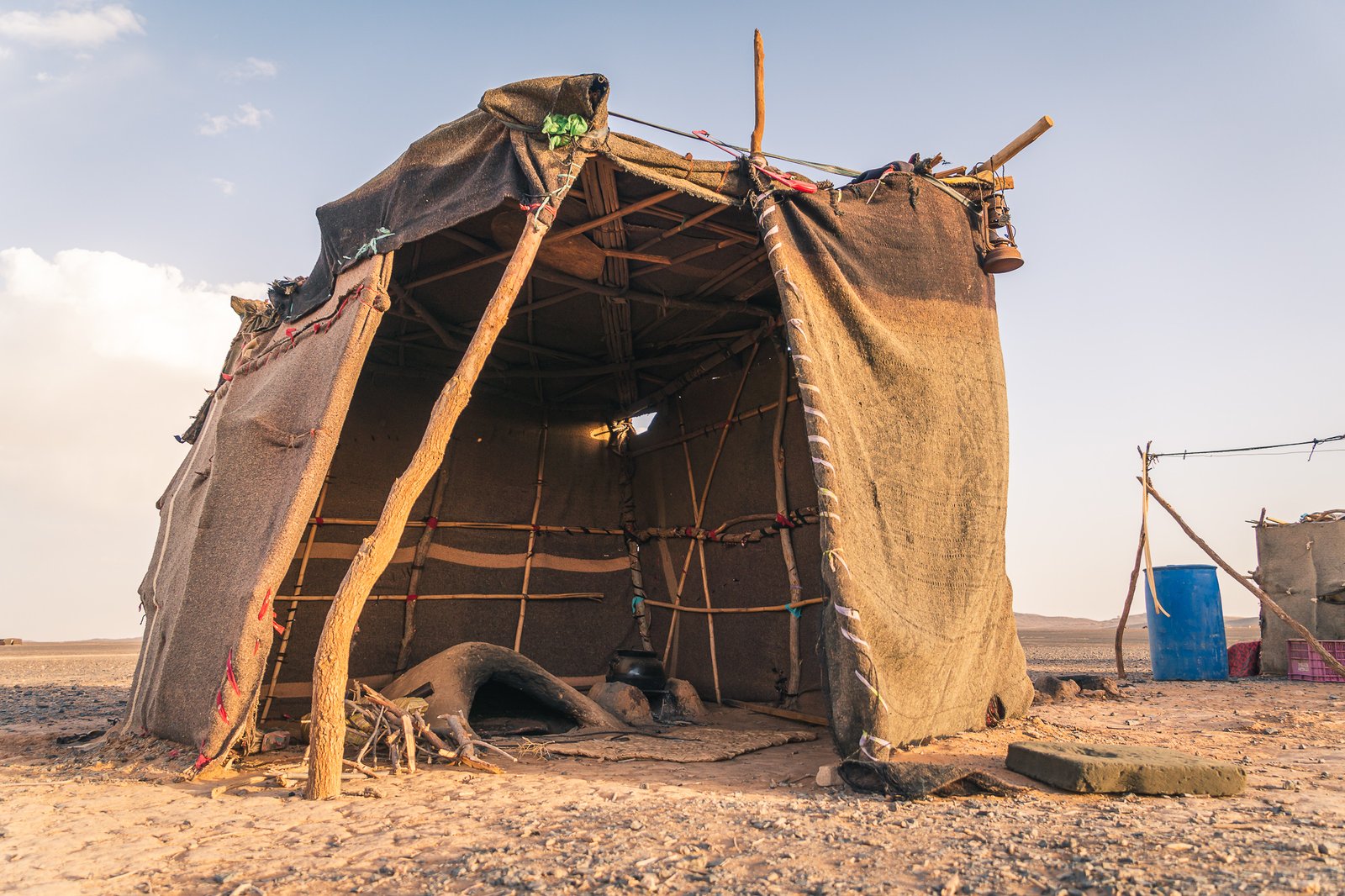
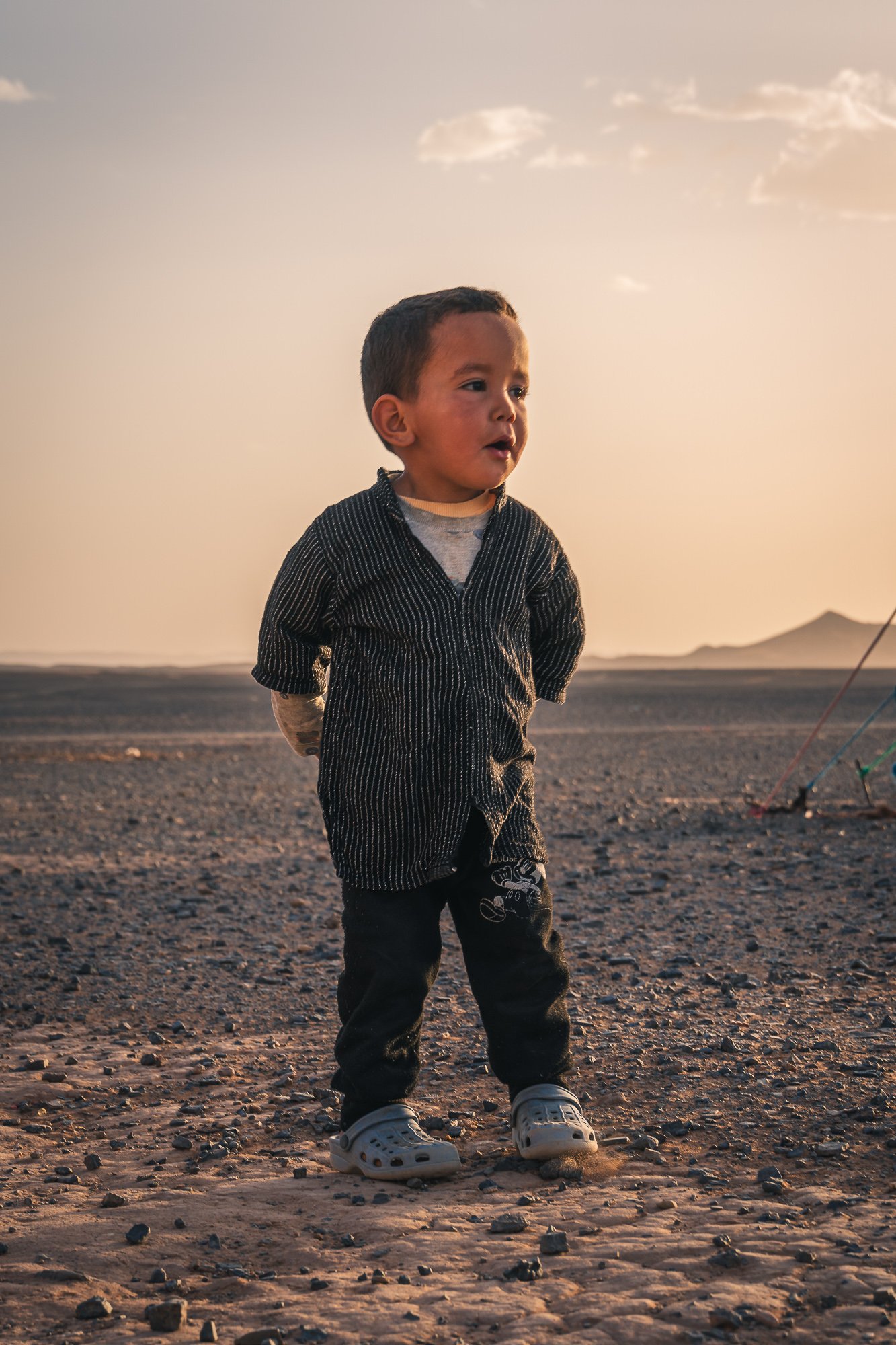
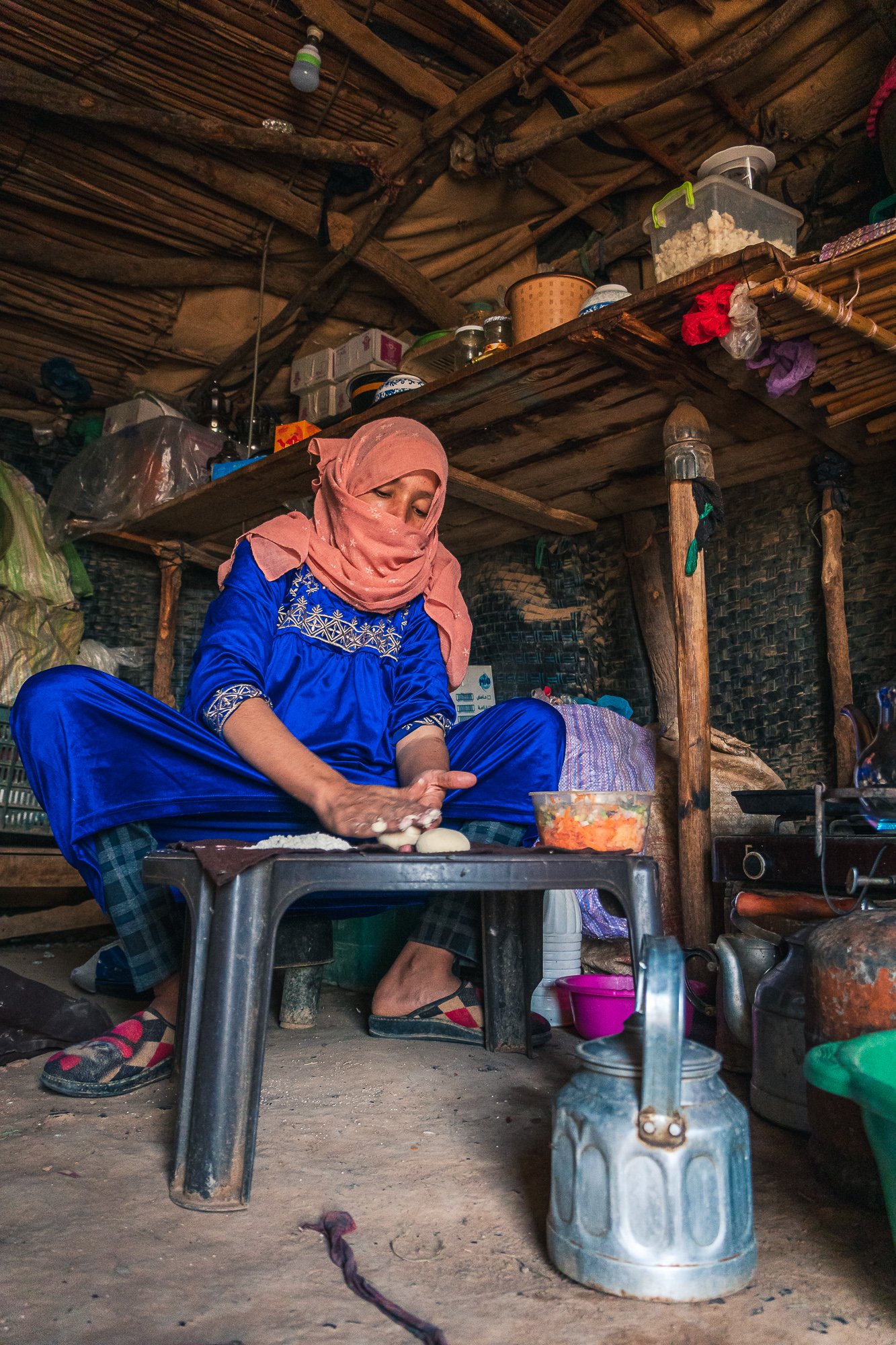
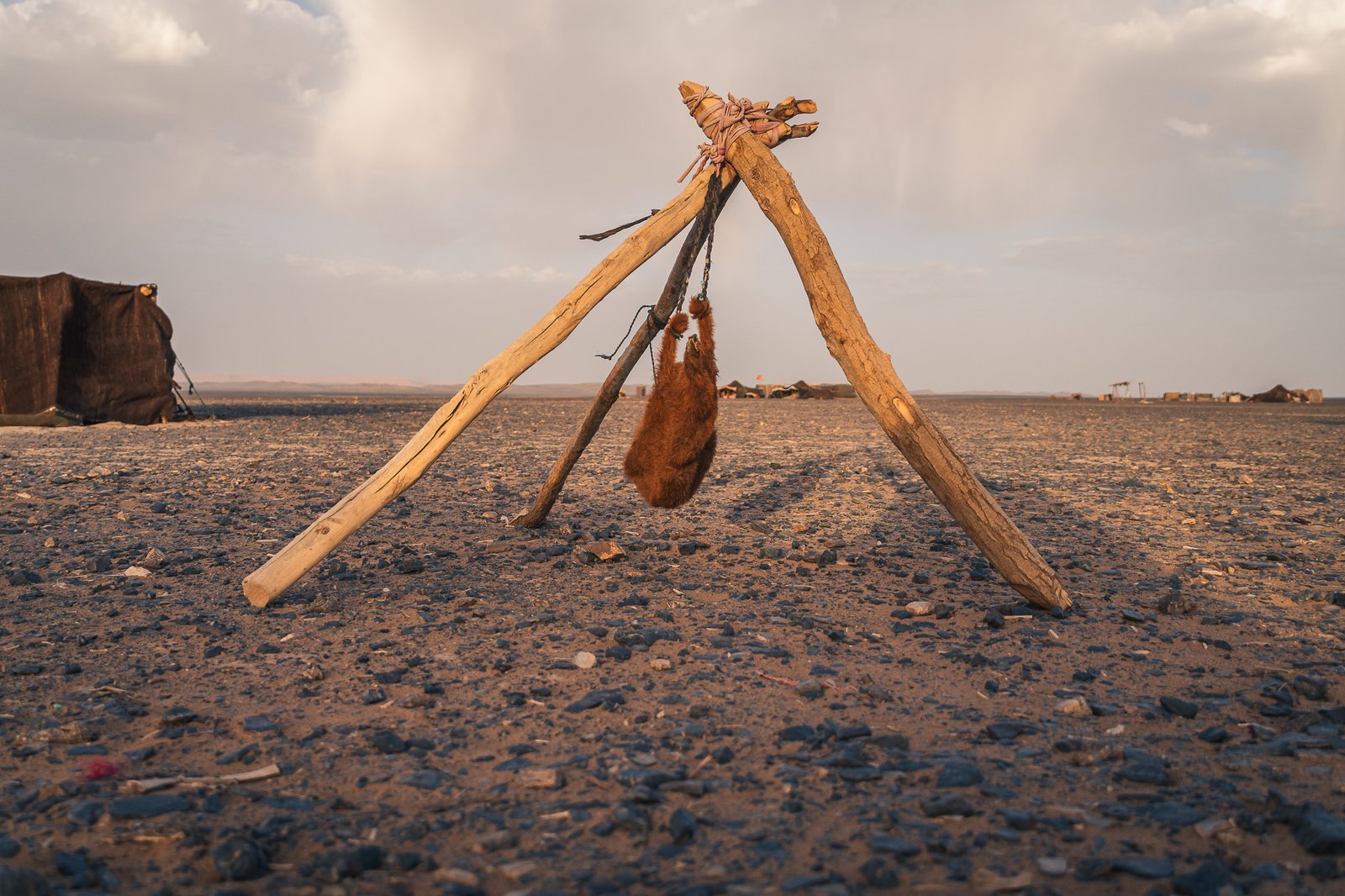
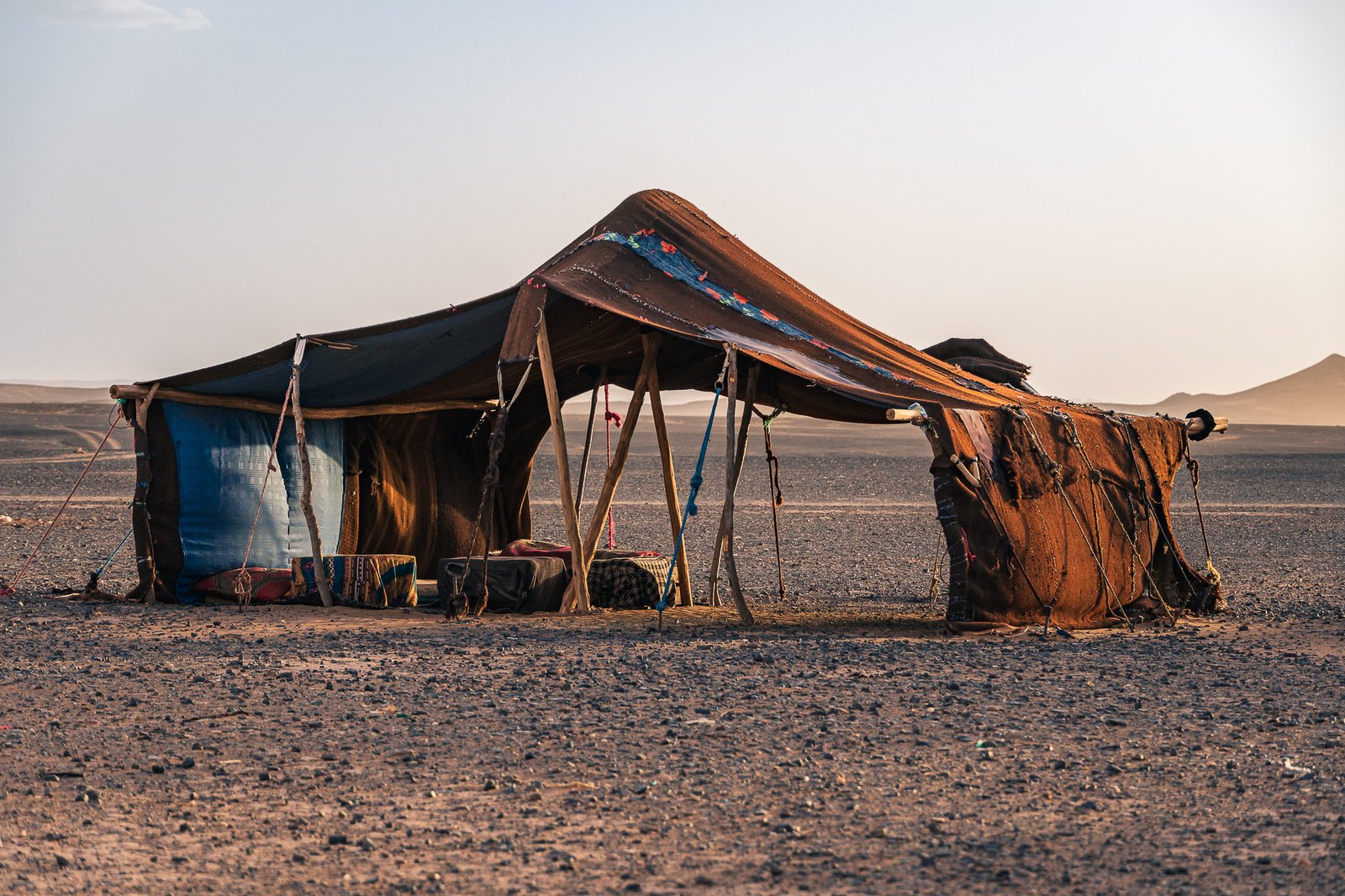
Across the edge of the Sahara, in the southwest of Morocco, life unfolds in rhythm with the land. Among the Imazighen, the Indigenous people of North Africa whose name in Tamazight means “free people”, existence follows the pace of wind and silence. Their identity has been shaped by the desert’s vastness, by the shifting dunes and the long struggle to preserve a sense of belonging in a landscape that demands resilience. For centuries, they have lived between mountains and sand, guided by an ancestral understanding of water, routes, and survival. The Amazigh world stretches across Morocco, Algeria, Tunisia, and beyond. In the southern valleys and the High Atlas, families continue to herd, weave, and trade much as their ancestors once did. The rhythm of daily life is measured not by the clock but by the seasons, a slow continuity that carries the memory of nomadic routes once connecting the Sahara to the Mediterranean. Each gesture, from tending animals to sharing tea under the shade of a tent, reflects the endurance of a people who have adapted without surrendering their essence. For generations, through shifting landscapes, the Imazighen remain deeply tied to their environment. Their songs, language and crafts, echo an identity that has survived both conquest and neglect. In villages and desert camps, old stories still pass between generations, telling of ancestors who crossed dunes by starlight, of water sources found by instinct, of freedom as a way of being. Sons of the Desert looks at the shared resilience that binds people to their land. It observes how identity survives through adaptation, turning tradition into a living form of resistance and continuity.